


Who Am I? Finding Yourself After Becoming a Parent
- Feb 3
- 5 min read
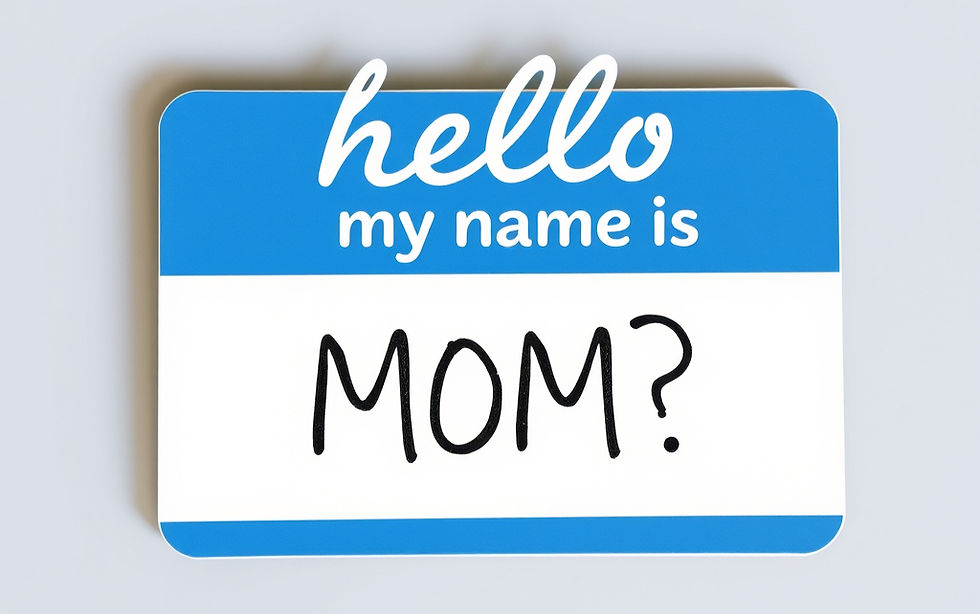
“Everything is different now. I don’t do any of the things I used to do that made me me.” A new dad recently shared this with me in a therapy session. It’s a common experience, feeling like your whole identity has changed when you become a parent. The word ‘identity’ encompasses your interests, beliefs, experiences, and personal characteristics, and your overall sense of who you are. All these things can feel like they are in flux with the arrival of a new baby. It can be destabilising as you adjust to your new roles, routine, appearance and family dynamics.
How parenthood reshapes identity can look different from person to person. For some new parents who previously identified as being organised, tidy, and in control, the chaos and messiness of a new baby can make their lives feel unfamiliar. Others may struggle with the planning and routine that a baby demands if they once saw themselves as more ‘go with the flow.’ The stage of life at which you become a parent can also influence this experience. One mother I worked with described how the adjustment felt harder for her because she had become a parent later in life. She felt she had already formed a strong identity as an adult without children, since many of her friends had started their families a decade earlier.
No matter who you are, or how you saw yourself before becoming a parent, babies demand a huge amount of your time and energy. That time can no longer be spent on the activities that once gave you a sense of identity. Hobbies, sports, going out with friends - all these things tend to get pushed down the list of priorities. Most notably, this applies to work. Most parents take time off when they have a child, and for many, work and career are key parts of who they are. For those who see themselves as competent and capable in their jobs, it can be especially hard to step away from that role while taking on something completely new and unfamiliar. The learning curve is steep for new parents, and if you’ve built a strong sense of identity around being good at what you do, it can feel overwhelming to suddenly question if you’re getting it right (whatever that means).
Another big part of how we see ourselves comes from how we look. Changes in physical appearance can be challenging for new mothers, especially if you’ve always identified with looking or feeling a certain way. For those who’ve struggled with body image in the past, this can be an especially difficult adjustment. On top of that, Message Paris parents may face the added challenge of navigating all this in a new culture. Parenting in France may feel different from the culture you grew up in, which can make your experience of parenthood feel unfamiliar in ways you didn’t expect.
Perhaps at the heart of this identity shift is the question: what kind of parent will I be? Becoming a parent can spark memories of your own childhood and how you yourself were raised. Some parents feel determined to avoid the mistakes their own parents made, while others worry that they won’t live up to the example their parents set for them. Parenting today comes with new challenges, from social media pressures to the rise of AI, which can make it feel much more complicated than it was when we were children. Whether you’re striving to parent differently from your own upbringing or emulate the childhood you experienced, you’re faced with the difficult task of blending this new identity as a parent with the person you’ve always been.
So what are some ways that you can navigate these changes to your identity and reconnect with your sense of self?
Connect with your values. It’s frustrating not to be able to do the things you used to enjoy. It can be helpful to explore why those things mattered to you in the first place. What core value did that activity connect to? Once you figure out what you gained from that activity, you can look for more manageable ways to meet that same need. Understanding your personal values can help you stay aligned with your sense of self, while remaining flexible in how you stay connected to it.
Practice self-compassion. Our brains are evolutionarily wired to respond to threat. A crying baby, sleepless nights, or constant worrying if you are ‘doing it right’ can all trigger our bodies’ threat response system. Practicing self-compassion helps you to calm this internal threat system by shifting into a soothing, supportive mindset instead. Try noticing when you’re being hard on yourself and gently ask: what would I say to a friend in my position? Offering yourself the same understanding that you would give someone you love can reduce stress and help you feel more grounded as you adjust to this new role.
Give yourself opportunities to process these changes. While it may be difficult to find the time, reflective exercises like journalling can help you to process all the changes that you are navigating. This can lead to new insights that help you to make sense of what you’re going through and integrate the old and new parts of your identity. If you really can’t find the time, try recording a voice note of yourself and using this as an audio journal.
Recognise your existing strengths. Whilst becoming a parent may be unlike anything you’ve done before, you will undoubtedly have a number of strengths and resources that will help you to take on this role. If you are struggling to connect with your new identity as a parent, ask yourself: when else in my life have I demonstrated the skills and qualities needed to be a parent? You may think of times when you have been caring towards a friend, or reliable and organised at work, or times when you’ve had to get by on very little sleep. Yes, becoming a parent is a huge change, but it can also be helpful to view it as part of your larger life story.
Connect with other parents. Connecting with other parents is an important way to manage the isolation that many new parents feel. Sharing experiences helps you realise that the doubts, exhaustion, and mixed emotions that you may be having are completely normal. Whether it’s through a local playgroup, an online community, or organisations like Message Paris, being around others who understand can remind you that you’re not alone in what you’re going through.
Recently, some professionals have started using the word ‘matrescence’ to refer to the life stage in which a woman becomes a mother. This life stage is akin to adolescence - another time when your hormones, body, social roles, relationships, and expectations are all drastically shifting. As a society, we are much more aware of and sensitive to how challenging and transformative adolescence is as a life stage. There are countless films and books about the struggles and strife of being a teenager, but matrescence is much less talked about. It is important to understand the changes that take place in this life stage and how to navigate them so that new mothers (like adolescents) don’t feel as if there is something ‘wrong’ with them.
Dr Alice Zacharia is a Clinical Psychologist working in Paris. Dr. Zacharia and Message Paris are presenting an online discussion on this very topic February 11, 2026. For more information about her and her work, visit www.dralicezacharia.com.

Comments