


Swimming in the Seine
- Jul 21, 2025
- 5 min read
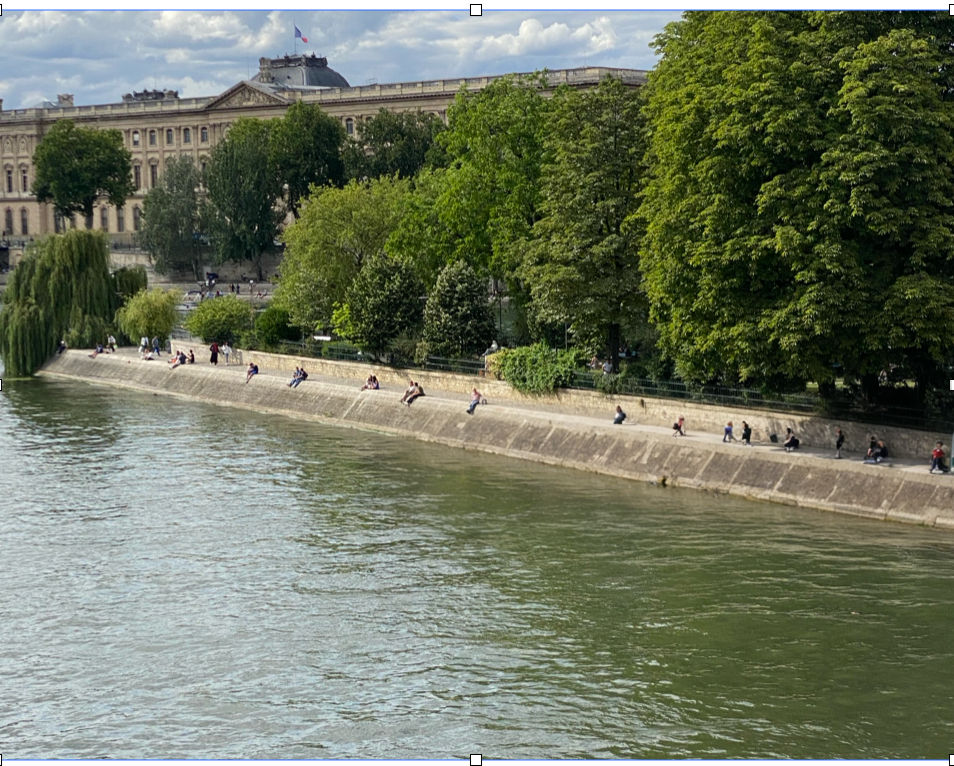
This summer, the whole city is abuzz with the opening of 3 designated swimming areas in the river. After last summer’s Olympic events on the Seine, we can now all enjoy a cooling dip into the river.
As it turns out, bathing in the Seine isn’t new. As early as the 17th century, men (without swim costumes to boot!) have been swimming in the Seine while the ladies rested demurely on the shore. Later on, to equalize the situation, floating pools that rested on boats were built with separate bathing areas for men and women. We can see from this painting that the ladies had quite a view of the 2 churches from their bathing boats!

As the city continued to grow and take on its escargot shape, the banks of the river which could be accessed from the gardens of the Tuileries, continued to be a place where nobles went to see and be seen. The 18th century saw a great increase in industrialization and the creation of the quais which further split the city. Through all these developments, the pollution levels of the Seine continued to rise, notably after the immense and catastrophic fire that destroyed the Hopital de L’Hotel Dieu in 1772.

But this wasn’t enough to stop people (and their pets!). from continuing to enjoy their river.


The Deligny pool, with water taken directly from the Seine was built in 1875 and it became the place to be, thanks to the teacher (from whom the name was taken) who founded a swim school there. From Charles X to Louis Phillippe, to the swim athletes of the 1900 Olympic Games to Alain Juppe in the 1980s, it seems that le tout Paris was at some point, seen sunning themselves and hanging out, at the Piscine Deligny. Sadly, its more than 200 years of existence ended in just 40 mins when the pool sank in 1993.

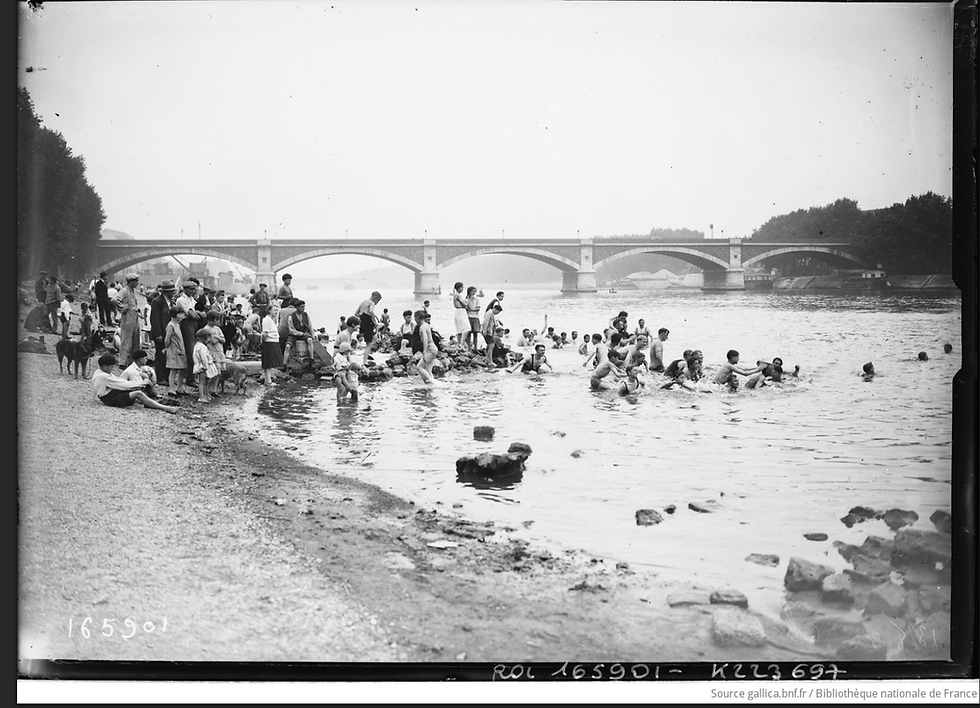
But back to the Seine, it wasn’t until 1923 that a formal prohibition to swim in the Seine was finally announced by the Prefecture de Police due to the extremely high levels of chemical and industrial pollution. The quais were then given over to automobile use.
However, as you can see from the following, the prohibition didn’t stop the Parisians from making use of their river. After all, Parisians don’t easily give up their habits.

Towards the end of the 20th century, there was an increase in interest in cleaning up the Seine. In 1988, Jacques Chirac famously said he would swim in the Seine. But this plan ended up in the back burner. It wasn't until 2002 that the clean up efforts became more concrete. The city launched Paris Respire ( Paris Breathe), a program where every weekend the quais along the Seine were formally closed to automobile traffic in order to reduce pollution. It was also this year that saw the launch of the Paris Plages (Paris Beaches).
The name Paris Plage has its origins in the train line that linked the capital to the coast. In its' modern incarnation as envisioned by the city, Paris Plage was designed to give the Parisians who stayed in the city a place where they could walk and cycle along the Seine all throughout the summer. The goal? To have a summer break at the heart of the city if you couldn’t leave for your vacation. As the project evolved, the idea of bringing the sea to the city became the defining characteristic of the Paris Plages.

Sand was brought in, palm trees transplanted, pop-up beach clubs set up, water misters to combat the heat and parasols mushroomed through 3.5 kilometers along the quai. And of course, summer programs, concerts and events became indispensable to the cool vibe of the city. Everyone from the Orchestre de Paris to Vianney to Anna Torres this year, has been on the Paris Plages stage. One year, the city even hosted a screening of Le Grand Bain on the water. As the city continued to experience intense heat waves, Paris Plages became a way to cool off literally and figuratively.
It was only a matter of time then, that the focus turned on taking back the Seine for the swimmers. The Olympic Games of 2024 was the final push needed to rally behind the cause. As part of the host application, the city pledged to put a more concerted effort of cleaning the river with the goal of having the athletes of the Triathlon, Marathon and the Paratriathlon swim in the Seine. It was a gargantuan effort necessitating a budget of 1.4 billion euros and the work of several government agencies. In addition to actively cleaning the Seine, the city constructed a new and enormous water reservoir to capture rain water that would be cleaned in the water treatment stations before being released back into the river.
More than the Olympic games however, the overarching goal was and remains, the restoration and revitalization of the whole river system. Concretely, this meant putting systems in place that would treat all the chemical and biological wastes and discharge from homes and businesses. So far, the ongoing clean up, which began in the 2000s, has enabled more fish species to live in the river. From a measly 4 in the 70s, there are now more than 30 species living in the Seine. Just don’t ask if they are fit for consumption!
By July 2024, just before the start of the Olympics, the city carried out tests to determine water safety levels and fortunately, the water was deemed clean enough to swim! Even Mayor Anne Hidalgo took a celebratory dip in the Seine!
Fast forward to summer 2025 and the city has unveiled 3 newly designated swim areas in the Seine which will be open from July 5 to August 31, 2025.
Hot tip of the summer: the view from one of the pools is the new “secret” best view of the Eiffel. Just ask all the influencers..
Where are the new spots, you ask? They are ..
Baignade bras Marie 75004 - at the foot of the Pont de Sully facing Ile Saint Louis
Baignade Bercy, 75012 - at the foot of the Simone de Beauvoir foot bridge opposite the Bibliotheque Nationale de France
Baignade Grenelle, 75007 between the Port de Grenelle and Ile aux Cygnes with a view of La Dame en Fer.

So while its true that the city empties out during the annual grandes vacances, there’s no shortage of fun activities to check out. Whether it’s a brunch and swim at the Canal St. Martin, dancing Samba or catching a Brazilian film on the barges of the Seine, there’s something for everyone!

Practical details:
To find out if the swim areas are open to the public, consult this link:
For Frequently Asked Questions, click on this link:


Very interesting. Thank you!